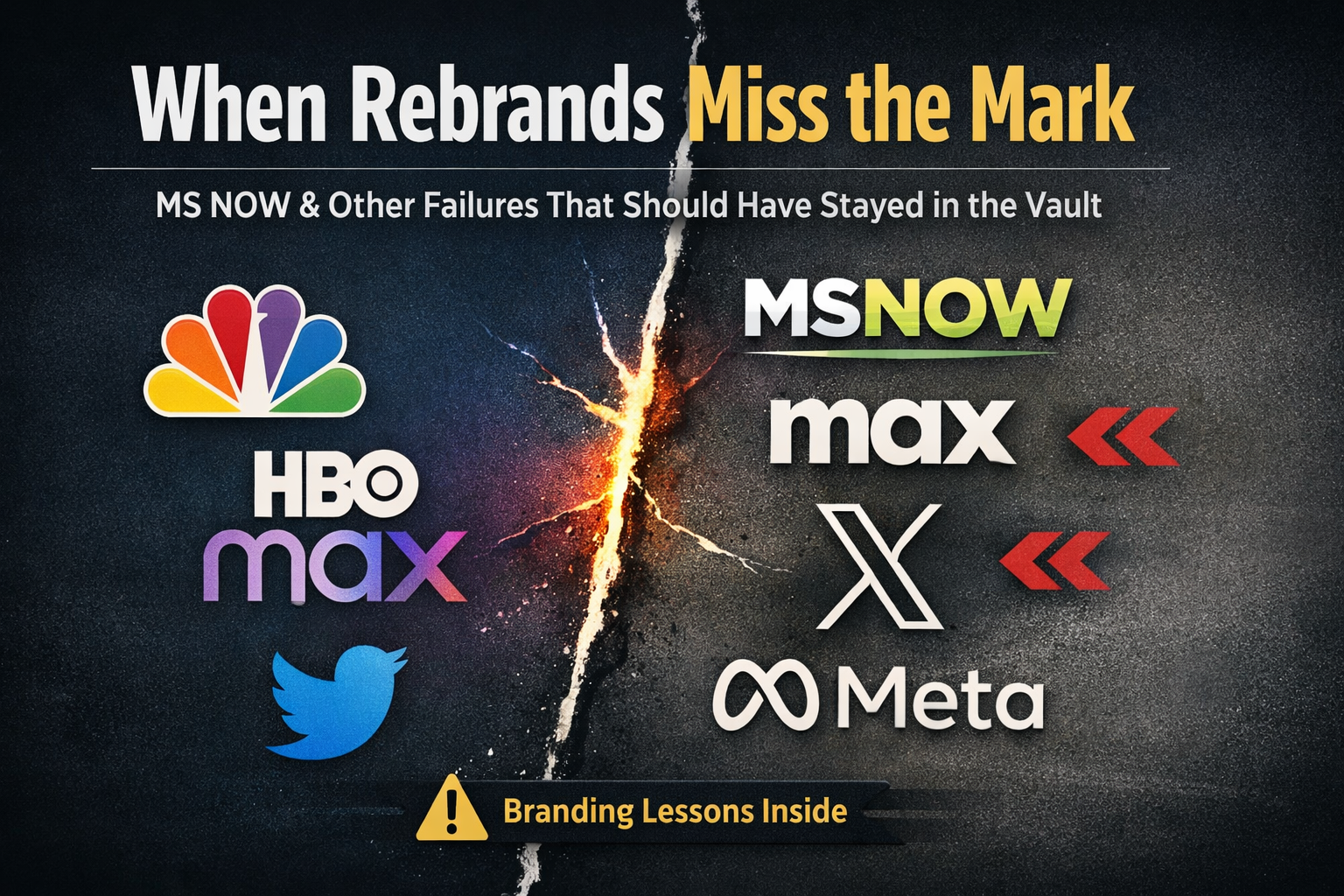

So I was recently going through my LinkedIn feed, just mindlessly scrolling, and what caught my eye was the MSNBC rebrand.
My first thought? Check the date. Surely it’s April 1 — because at first glance, this looked like an April Fool’s prank. But nope. It’s real.
MSNBC is now MS NOW. Out goes the Peacock, in comes a flat red-and-blue flag logo. The name stands for “My Source for News, Opinion, and the World.” But to most people, it sounds more like a bad consulting firm pitch. And yes, the acronym gave the internet plenty of ammo.
One critic summed it up nicely:
“A perilous history of corporate rebrands shows what happens when executives fall out of touch with what their audiences actually care about.”
This is the thing about rebrands — nobody on the outside asked for them. And when companies drop heritage overnight, they usually land with a thud.
MS NOW – Already in Trouble

The issue with MS NOW isn’t just the name. It’s that it rips away history without giving anything better in return.
Dropping the Peacock might make sense in a Comcast spin-off deck, but to viewers it’s emotional theft. You don’t cut out something people grew up with and expect them to shrug.
As one commentator put it:
“You can’t surgically remove decades of identity and expect audiences not to notice the scar.”
The Graveyard of Rebrands
MS NOW isn’t alone. The past few years have been littered with “bold” rebrands that ended up as branding cautionary tales.
HBO Max → Max – From Prestige to Plain

Warner Bros. Discovery thought cutting HBO from HBO Max would help broaden the audience. Instead, they dropped the one thing people actually loved.
Debbie Millman, one of branding’s sharpest voices, said it best:
“HBO took four decades of prestige and casually tossed it into a dumpster, lit a match, and cheered as it burned.”
The numbers agreed: 1.8 million subscribers gone in one quarter. Even Netflix’s Ted Sarandos chimed in, saying:
“It should be HBO. Of course it should be HBO!”
By 2025, the “Max” experiment quietly ended — and HBO was back in the name. Prestige doesn’t need explaining.
Twitter → X – Killing a Bird, Losing Billions

Twitter wasn’t just a brand. It was culture. Tweets, the bird, that little blue app everyone knew.
Then Elon Musk renamed it X overnight — because he likes the letter.
Rolling Stone called it a rebrand that:
“Reeks of desperation.”
Ad revenue collapsed by half, brand value was “wiped out,” and a year later people still call it Twitter. Mike Proulx put it bluntly in The New York Times:
“The brand value has been wiped out.”
If HBO was a dumpster fire, Twitter → X was an extinction event.
Jaguar – The Predator Became a PowerPoint

Jaguar wanted to signal its electric future, so in 2021 it stripped back its logo into a flat wordmark.
The problem? It lost all its roar. Fans called it sterile. One critic nailed it:
“Jaguar has gone from a predator to a PowerPoint.”
Sales went from 180,000 cars in 2019 to under 90,000 in 2023. The cars didn’t just stop selling because of the logo — but it certainly didn’t inspire anyone to dream.
Facebook → Meta – From Visionary to Meme
Facebook becoming Meta was meant to scream “future.” Instead, it whispered “escape route.”
With misinformation scandals raging, the pivot looked like running from the past instead of owning it. Reality Labs went on to lose $40 billion chasing the metaverse.
One Financial Times writer put it cleanly:
“Meta was meant to sound like vision. Instead, it sounded like vaporware.”
The only people who believed in the name change were inside Menlo Park. Everyone else just laughed.
The Classics That Still Haunt Boardrooms
- Tropicana (2009): Changed its cartons. Sales tanked 20% in two months. Reversed in six weeks.
- Gap (2010): New logo. Public outrage. Gone in less than a week.
- Pepsi (2008): Costly redesign that looked like a “fat smile.” Still roasted today.
These aren’t just stories — they’re cautionary slides every branding team has seen. And still, companies repeat them.
Why Do Rebrands Fail?

Patterns are clear:
- They erase heritage. HBO, Twitter, MSNBC — gone overnight.
- They look soulless. Corporate flatness rarely excites.
- They forget to explain. A story untold is a story mocked.
- They ignore emotion. Logos live in people’s hearts, not in investor decks.
Why Companies Still Risk It
If the risks are so obvious, why keep doing it?
- Mergers & spin-offs. Versant wanted a clean slate.
- Expansion. HBO wanted more than prestige.
- Tech pivots. Facebook wanted a metaverse halo.
- Relevance. Jaguar wanted to look futuristic.
The reasoning is always logical. The execution is where it all unravels.
A Smarter Playbook for Rebrands
If you want to avoid ending up in the graveyard, here’s the cheat sheet:
- Evolve, don’t erase. Coke tweaks its logo, but the script never changes.
- Tell the story. Change without context feels like betrayal.
- Stay human. Clean lines don’t equal connection.
- Test outside the boardroom. If your cousin laughs at it, maybe the world will too.
- Lean into humor. If people roast you, join in. It buys goodwill.
- Fix it fast. Gap reversed in a week. Smart.
- Remember who owns the brand. Legally, it’s the company. Emotionally, it’s the people.
Final Thoughts
MS NOW might settle over time. People adjust. But the launch already places it alongside the likes of Max, Meta, and X.
The bigger point? In the race to modernize, companies forget that branding isn’t about logos or names. It’s about trust, memory, and emotion.
A brand isn’t what you put in your guidelines. It’s what people feel when they see it.
And feelings — once broken — don’t rebrand so easily.
For any suggestions or corrections, feel free to reach out at contact@anshuanand.in


